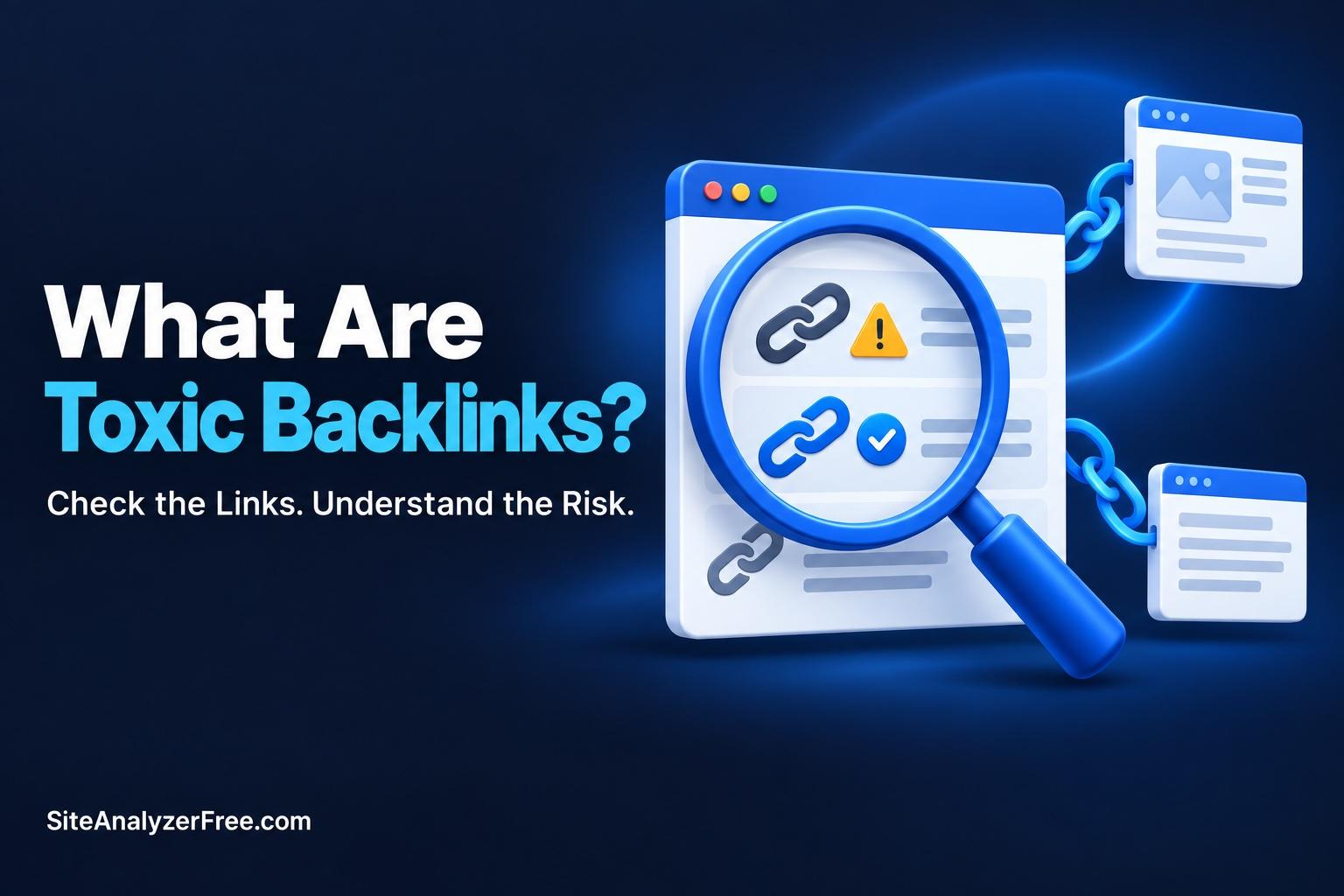
What Are Toxic Backlinks? How to Check Your Links and Know What to Remove
TL;DR: Toxic backlinks are links that an SEO tool flags as potentially spammy or manipulative. A flag is a reason to investigate—not proof that a link is hurting your website. Review the context before removing anything, and don’t automatically submit every flagged link to Google’s disavow tool.
You open your SEO audit and see a warning about potentially toxic backlinks.
That sounds bad. The word “toxic” makes it sound like something is actively poisoning your website and needs to be removed immediately.
But hold on. There’s more to it than that.
Backlink reports can help you find things worth investigating. The important part is understanding what the findings mean before deciding what to do.
What Are Toxic Backlinks?
A backlink is a link from another website to yours. If a local newspaper mentions your business and links to your website, that’s a backlink.
“Toxic backlinks” is a term used in SEO tools and services to describe links considered potentially harmful, spammy, or manipulative. Different tools assess those risks differently.
A tool’s toxicity score is not a Google penalty notice.
Think of a flagged backlink as a question: Why is this website linking to me, and is there anything about that link I should investigate?
That’s how I recommend approaching the backlink risk indicators in our SEO audit. Use them to guide a review rather than treating them as an automatic removal list.
What Makes a Backlink Toxic?
The biggest concern is a link created to manipulate search rankings.
Google’s link spam policies identify practices such as buying links that pass ranking credit, automated link creation, excessive link exchanges, and links placed in low-quality directories or spammed comments. Paid advertising links can be acceptable when properly qualified with rel="sponsored" or rel="nofollow." Read Google’s link spam policies.
A practical example of good vs. toxic links:
A real industry publication links to your article because it helps explain something to its readers. There’s a clear reason for the link.
Compare that with buying a package of 5,000 links placed across unrelated websites purely to influence rankings. That’s the kind of activity that deserves closer attention.
The purpose and placement matter.
An Unfamiliar Website Isn’t Automatically a Bad Website
Don’t judge a backlink just because you don’t recognize the domain.
A small community organization might have an older website but a perfectly legitimate reason to recommend your business. A new industry blog might have very little authority according to an SEO tool while still publishing useful information.
A low score, unfamiliar domain, or different language is not enough on its own to justify removing a link.
Ask yourself: Does this link make sense where it appears?
You don’t want to remove a useful mention simply because the website isn’t famous.
How Do I Check Backlinks to My Site?
A free starting point is Google Search Console.
Once you’ve verified your website, open the Links report. Under external links, you can explore your top linking sites, most-linked pages, and common linking text. You can also export data for review.
Keep in mind that this is a sample, not a complete inventory. It can include links Google found previously that have since disappeared. See Google’s Links report documentation.
You can also use the backlink information in our Full SEO Audit as a starting point for reviewing your link profile.
Compare the findings and look for patterns. Don’t assume every difference between reports means something is wrong.
How Can I Check for Toxic Backlinks?
Start with the flagged links, then investigate the context.
Here are the questions I would ask:
- Why is the link there? Is it a recommendation, citation, business listing, advertisement, or something else?
- Does it fit the page? Would a real reader have a reason to follow it?
- Did someone arrange it? Ask whether you or a previous SEO provider purchased or created the placement.
- Is there a pattern? One odd link is different from a coordinated campaign across hundreds of pages.
- Has Google reported a problem? Check the Manual Actions report in Search Console for an unnatural-links notice.
If you hired someone to build backlinks, ask for the placement records. Knowing how the links were obtained can be more useful than staring at a score.
Should You Remove Every Flagged Backlink?
No.
Google says it can usually determine which links to trust without additional help, and most websites do not need its disavow tool.
Its guidance reserves disavowing for situations involving a considerable number of artificial or spammy links that have caused—or are likely to cause—a manual action. Read Google’s disavow guidance.
That means a handful of strange links doesn’t automatically call for a cleanup project.
It also means you shouldn’t assume backlinks caused a traffic drop just because a report flagged some of them. Investigate what changed before deciding on the fix.
How to Get Rid of Toxic Backlinks
If your review identifies an actual link scheme or other clear problem, work through it carefully.
First, stop creating the problem. If you’re paying for manipulative link placements, end that activity.
Next, address links you control or arranged. Work with the provider or publisher to remove inappropriate placements or properly qualify paid links.
For links you can’t remove, evaluate whether disavowing is warranted. Disavowing asks Google to disregard specified links; it does not delete them from the other website. Google warns that incorrect use can hurt search performance. If you have a manual action, follow its cleanup and reconsideration process. Review Google’s instructions before taking action.
Keep a record of the links reviewed, the evidence, and the actions taken. Avoid turning a risk score into a bulk-removal decision.
Use the Report to Ask Better Questions
The value of a backlink audit is finding out where you should look more closely.
Some findings may need attention. Others may turn out to be legitimate links or unrelated spam that doesn’t require action.
My advice is simple: understand the link before trying to get rid of it. You want to address real problems while keeping the useful mentions your business has earned.
Visit SiteAnalyzerFree.com’s Full SEO Audit to review backlink insights alongside your website’s keyword opportunities, technical findings, and recommended next steps.